My Toughts
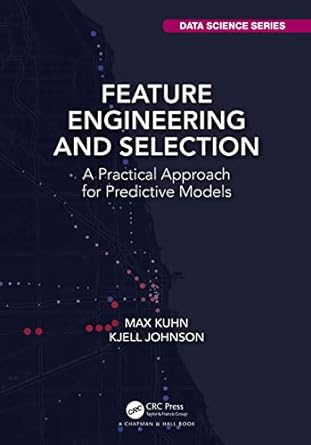
Feature engineering and selection are vital components of building effective predictive models. In “Feature Engineering and Selection: A Practical Approach for Predictive Models” by Max Kuhn and Kjell Johnson, readers are provided with a wealth of knowledge on creating better models by focusing on predictors, identifying patterns, and optimizing features. In this comprehensive post, I’ll explore key lessons from the book, shedding light on the importance of simplicity, supervised vs. unsupervised techniques, model complexity, handling missing data, model evaluation metrics, and feature selection methodologies.
This book is one of my favorites and offers a treasure trove of insights into crafting effective predictive models. The book’s guidance on model simplicity, data representation, model complexity, and the interplay between models and features is invaluable for practitioners. It underscores the importance of continuous feature engineering and the flexibility to adapt to the specific needs of each project. By following the principles outlined in the book, you can build predictive models that deliver both accuracy and interpretability, ensuring their effectiveness in solving real-world problems.
Also it can be found online at “Feature Engineering and Selection: A Practical Approach for Predictive Models” – Max Kuhn and Kjell Johnson.
Key Lessons
The Elegance of Simplicity:
The book emphasizes that simple models often outperform complex ones, especially when interpretability is a key goal. Complexity can be a solution to poor accuracy, but it frequently sacrifices interpretability. The trade-off between accuracy and interpretability is a central consideration in model building.
The Significance of Feature Engineering:
Feature engineering, the art of creating effective data representations, is crucial in boosting model performance. The book highlights that different ways to represent predictors can significantly impact model effectiveness. The goal is to build models that achieve a balance between accuracy, simplicity, and robustness.
Supervised vs. Unsupervised Analysis:
The book distinguishes between supervised and unsupervised data analysis. Supervised analysis focuses on patterns between predictors and an identified outcome, while unsupervised techniques, like cluster analysis and principal component analysis, explore patterns among predictors. Recognizing this fundamental difference guides the choice of modeling approach.
Pragmatic Model Building:
The book advises a pragmatic approach to model building by trying different modeling methods to find the best fit for your specific dataset. The complexity of real-world data often necessitates an iterative and adaptive model-building process.
Understanding Model Variance and Bias:
The book explains the concept of model variance and bias. Models with low variance, such as linear regression and logistic regression, rely on aggregated data and are less prone to overfitting. In contrast, high-variance models like decision trees and neural networks are sensitive to individual data points, which can lead to overfitting.
Context Matters in Feature Engineering:
The book underscores the importance of understanding the context of a project when performing feature engineering. It’s challenging to make recommendations for predictor representation without considering the specific problem and dataset at hand.
Big Data Realities:
Contrary to the belief that big data guarantees better results, the book highlights that merely having a large dataset doesn’t guarantee a relationship between predictors and outcomes. The quality and relevance of data remain paramount.
Feature Scaling and Model Performance:
Feature scaling should be tailored to the requirements of specific models. Some models, like k-means clustering, require scaled features to perform effectively, while others, like decision trees, are insensitive to scale. Understanding which models need scaled features is essential for optimal performance.
The Intricate Relationship Between Models and Features:
The book acknowledges that the interplay between models and features is complex and often unpredictable. It advises practitioners to maintain a dynamic approach to adapt to the evolving needs of the project.
Feature Selection Considerations:
Feature selection is about reducing the number of predictors to enhance model performance. Intrinsic, filter, and wrapper methods are introduced, each with its advantages and drawbacks. Practitioners are advised to choose the method that best aligns with their objectives and data characteristics.
Beware of Overfitting:
Overfitting, a common challenge in feature selection, can lead to the inclusion of predictors that lack true predictive power. It’s essential to select predictors that improve predictive performance without overcomplicating the model.
The Role of Missing Data:
The book stresses the importance of understanding missing data. Imputation and encoding of missing values require careful consideration, especially in situations where time or domain-specific characteristics are involved.
The Impact of Correlation:
Highly correlated predictors can complicate model fitting. To address this issue, the book advises filtering out correlated features before applying feature selection techniques.
Focus on Interactions:
Feature interactions can significantly enhance model performance. The book highlights the importance of identifying interactions between predictors and demonstrates that certain modeling techniques can effectively uncover these relationships.
The Challenge of High-Dimensional Data:
As the number of predictors grows, the ability to curate each predictor individually diminishes. Exploratory data analysis and domain knowledge become crucial in navigating high-dimensional data effectively.
Metrics Matter in Model Evaluation:
The book introduces various metrics for evaluating predictive models, including RMSE, (R^2), precision, recall, Cohen’s Kappa, AUC, Gini criterion, and entropy. Practitioners should select the metric that aligns with the specific goals of their modeling problem.
Data Splitting Strategies:
The book highlights the importance of data splitting for model development and evaluation. It suggests that the training set should be used for developing models, while the test set provides an unbiased assessment of model performance.
Resampling Methods:
Resampling methods, such as cross-validation and bootstrap, are powerful tools for assessing model performance and mitigating issues like overfitting. These methods provide more realistic performance estimates, especially when data is limited.
Feature Engineering as an Ongoing Process:
Feature engineering is not a one-time task but an iterative and evolving process. Regularly evaluating and refining features is essential to maintain or improve model predictivity.